
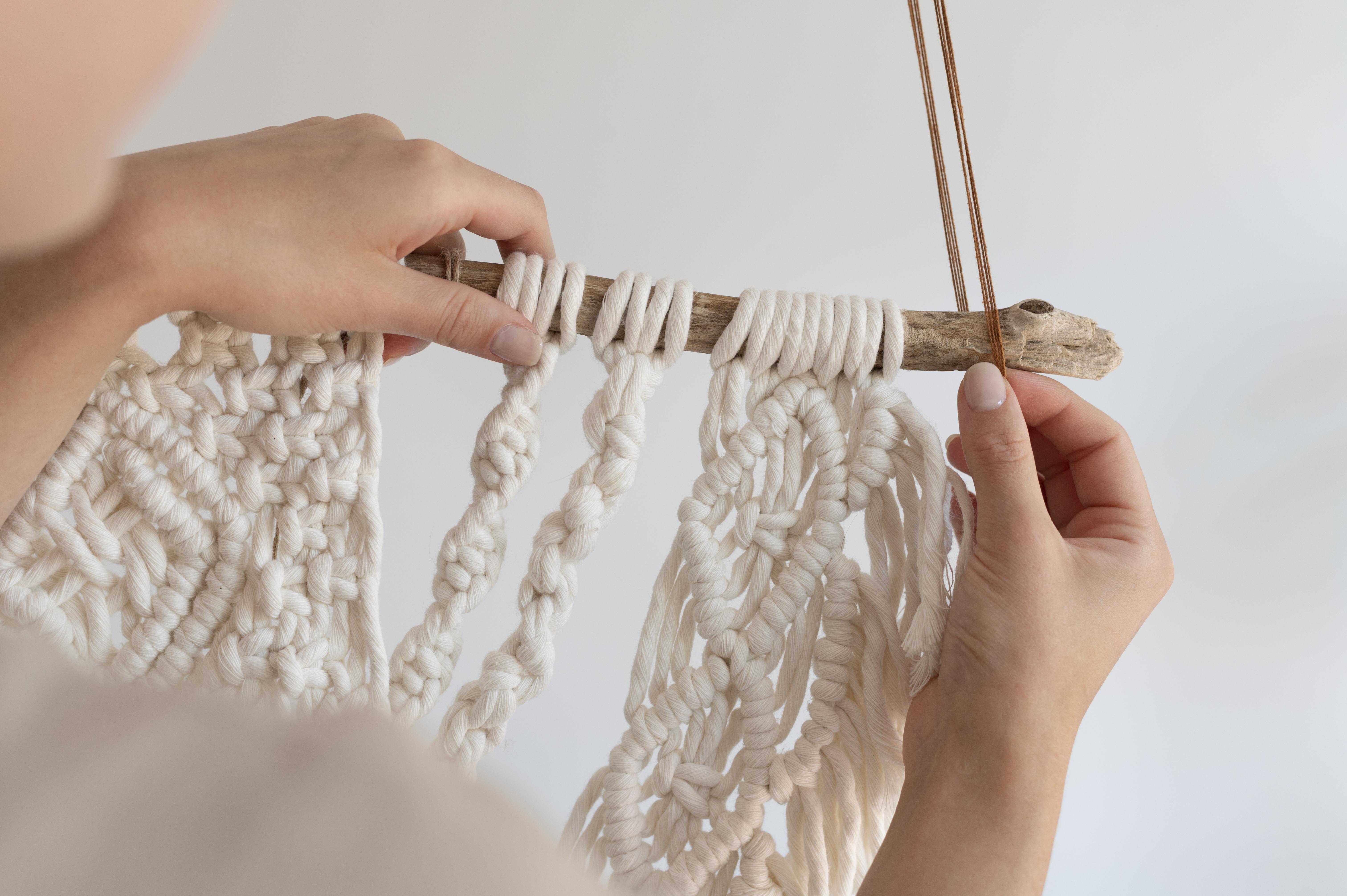
Macramé has enjoyed a remarkable resurgence in recent years, finding its place in modern homes, creative studios, and artisanal markets. For many, it represents more than just a craft, it is a mindful, tactile way to create something beautiful by hand.
As Nelmari Oosthysen, owner of A Peace of Art, explains, “Macramé is wonderfully accessible. You don’t need complicated tools to begin—just a few basic materials and a willingness to learn. That’s part of its charm.”
The Origin of the Word Macramé
The word macramé is believed to originate from the Arabic word “migramah,” meaning “fringe” or “ornamental trimming.” This reflects the decorative knots and fringes that define the craft. Historically, Arab weavers used knotting techniques to finish the edges of textiles, preventing unraveling while adding intricate detail. From there, the craft spread across continents, evolving into the decorative art form we recognise today.
Where Macramé Began
Macramé’s journey spans centuries and cultures. After its early use in the Middle East, it made its way into Europe through trade routes, gaining popularity in Spain and Italy. By the 17th century, it had become a fashionable craft in England, particularly among sailors who used knotting techniques during long voyages. These sailors often created decorative items to sell or gift upon returning home, further spreading the craft around the world.
Today, macramé has been reimagined with a contemporary twist, blending traditional knotting techniques with modern design aesthetics.
Equipment and Supplies Needed for Macramé
One of the appealing aspects of macramé is its simplicity, getting started does not require a long list of tools. The essentials include:
- Cord or rope: Cotton cord is the most popular choice due to its softness and ease of use, though jute, hemp, and synthetic options are also available.
- A support structure: This could be a wooden dowel, branch, or metal ring from which your piece is suspended.
- Scissors: A good, sharp pair is essential for clean cuts.
- Measuring tape: Accuracy helps ensure symmetry in your design.
- Optional tools: Combs (for fringing), clips, or mounting boards can assist in keeping your work organised.
Where to Start with Macramé
For beginners, the best approach is to start small and focus on mastering a few fundamental knots. These include:
- The square knot
- The half hitch
- The lark’s head knot
Simple projects such as keychains, plant hangers, or wall hangings provide an excellent introduction. Following step-by-step tutorials or attending workshops can also help build confidence and technique.
According to Nelmari, “Starting with the basics allows you to build confidence quickly. Once you understand the core knots, you can begin experimenting and developing your own unique style.”
Patience is key. Macramé is as much about the process as it is about the final product, encouraging mindfulness and creativity along the way.
What to Do with Your Finished Macramé Piece
Once your macramé creation is complete, the possibilities are endless. Many people use their pieces as home décor such as wall hangings, plant holders, table runners, or even curtains. These handmade items add warmth and texture to any space.
Macramé can also be functional. Items such as bags, belts, and storage holders combine practicality with artistic flair. For those with an entrepreneurial spirit, selling handcrafted macramé products at markets or online platforms can turn a hobby into a small business.
Nelmari adds, “There’s something incredibly rewarding about seeing a finished piece displayed in your home or gifted to someone else. Each knot tells a story, and every piece carries a bit of the maker’s personality.”
A Craft That Connects Past and Present
Macramé is more than just a decorative craft, it is a link between tradition and modern creativity. Its rich history, combined with its accessibility and versatility, makes it an ideal medium for anyone looking to explore their artistic side.
At A Peace of Art, macramé continues to inspire creativity and connection, proving that sometimes the simplest materials can create the most meaningful works of art.
Contact and follow A Peace of Art
A Peace of Art holds regular workshops in both Port Elizabeth and Bloemfontein.
Follow us on social media to find out when the next workshop will be happening.
Facebook: @apeaceofartcreativeartsandcraftsworkshops
Instagram: @apeaceofart
Port Elizabeth: 85 Main Road, Walmer. Tel: 072 304 0797
Bloemfontein: 7 Avenham Street, Avenham. Tel: 076 192 1637